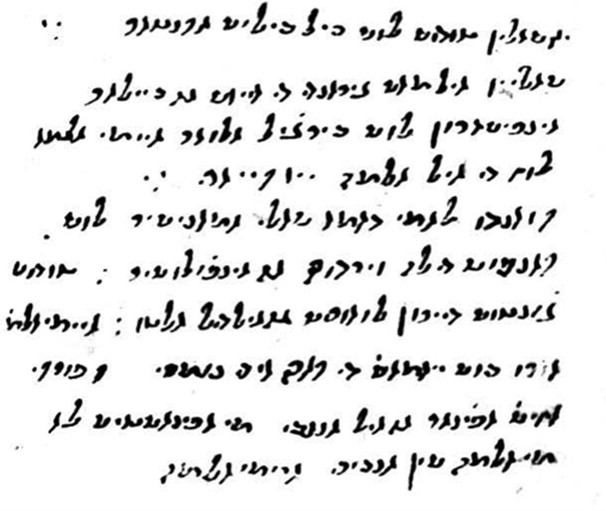
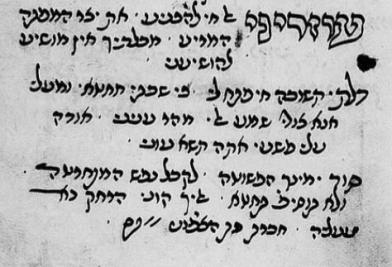
Sephardic romances, as a rule, were transmitted orally. Only since the late nineteenth century have scholars begun to document and publish texts of romances they collected from Sephardic singers. Texts of Sephardic romances preserved in written sources preceding modern ethnography are therefore extremely rare. This essay addresses one of those unique romances preserved (in Hebrew characters, as Judeo-Spanish was traditionally written) in a manuscript dated in 1778 from the library of the Talmud Torah (Ms. 142) in Livorno, Italy. The hero of this romance, named by scholars La Huida de Jacob (Jacob’s Escape), is the patriarch Jacob. The title of the romance in the Livorno manuscript is חלום של יעקב, Jacob's Dream.
As far as we know, this is the first publication of this version of La Huida de Jacob. However, the Livorno manuscript version of this romance is not the only one preserved in writing. The song was already printed in Leuven in 1699 as an appendix to a rare set of two comedies for Purim originating in the Portuguese Jewish community of Amsterdam (Van Praag 1939; Besso 1939: 328-332; Glaser 1956). This may not be coincidental, as midrashim on the Book of Esther relate Mordecai to Jacob and Haman to Esau (Van Praag 1939: 23). Díaz-Mas (2006–2007; 2013, with Sánchez Pérez) published another version included in a private manuscript songbook compiled around 1761–1770 by Abraham Yisrael from Gibraltar, a descendant of a Sephardic family from Morocco. Unlike the text in the Livorno manuscript, these two versions are in Latin characters. Moreover, the three extant versions of La Huida de Jacob that have survived are not identical, revealing in their difference aspects characteristic of oral transmission. They also show that La Huida de Jacob circulated among Western Sephardic Jews for at least a century before it fell into oblivion.
Romances based on narratives from the Hebrew Bible are not an uncommon phenomenon. Biblical romances are known in oral tradition among Christians in Spain as well as among Sephardic Jews (see Refael 1997; Salama 1982, 1997; and many others). Yet no romance about the patriarch Jacob survived in the Sephardic oral tradition.
Original Text (First page only)
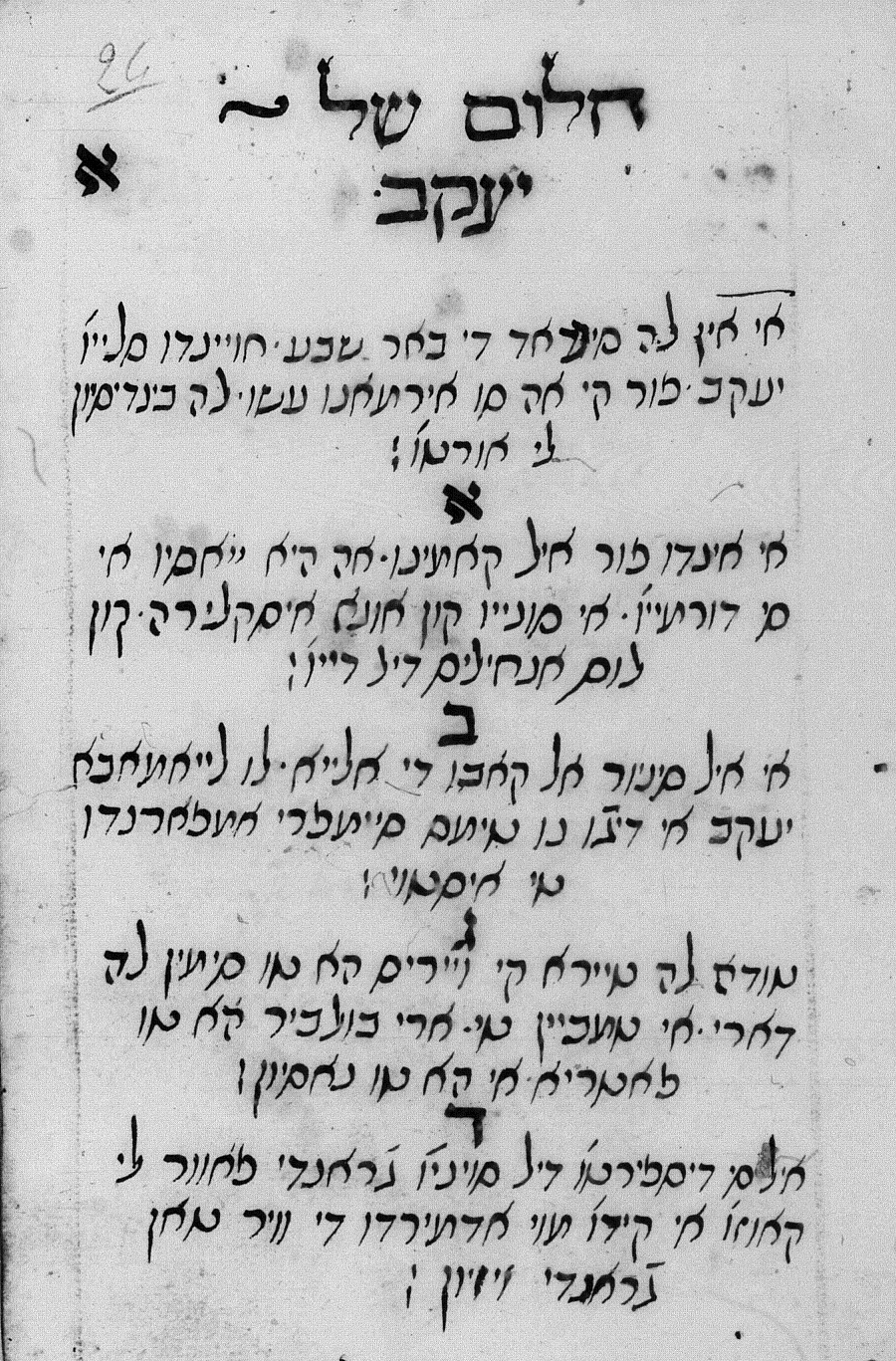
Transcription and Transliteration
|
Jacob's Dream
Y en la ciudad de Beer Šeba huiendo saliό Yaacob
Por que a su hermano Esaú la bendiciόn le hurtό
1
Y indo por el camino ahí yaciό y se durmiό
Y soñό con una escalera con los angeles del Dio
2
Y el Señor acabo de allá lo llamaba Yaacob
Y dijo no temes siempre amparándote estoy
3
Toda la tierra que vieres a tu semen la daré
Y tambien te haré volver a tu patria y a tu naciόn
4
El se despertό del sueño grande pavor le causό
Y quedό muy admirado de ver tan grande visiόn
5
Y tomό un vaso de aceite sobre la piedra lo echό
Y ahí prometiό promesa y su camino siguiό
6
Abrevando las ovejas con grandisimo fervor
Vido pasar una pastora tan hermosa como el sol
7
Quien eres bella señora le dijo el noble Yaacob
Rahel hija de Laban descendiente de Nahor
8
Se la tomό por la mano y llorό y la besό
Que le entraba en l'alma un costante y firme amor
9
Rahel se lo dijo a su padre y a el istante lo buscό
Y lo llevό a su casa y con sus hijas lo casό
10
Acabo de vente años de este modo lo engañό
Para darme la mayor antes de la menor
11
Respondiό Laban no se usa en nuestra tierra
Para dar la menor antes de la mayor
12
Con este son doce versos doce tribus de el saliό
De ahí se fraguό Yisrael pueblo escojido de Dios
|
חלום של יעקב
אי אין לה סיבדאד די באר שבע חויינדו סלייו יעקב
פור קי אה סו אירמאנו עשו לה בינדיסיון לי אורטו
א
אי אינדו פור איל קאמינו אה היא ייאסיו אי סי דורמייו
אי סונייו קון אונא איסקלירה קון לוס אנחיליס דיל דייו
ב
אי איל סיניור אל קאבו די אלייא לו לייאמאבא יעקב
אי דיג'ו נו טימס סיימפרי אמפארנדו טי איסטוי
ג
טודה לה טיירא קי וייריס הא טו סימין לה דארי
אי טמביין טי ארי בולביר הא טו פאטריא אי הא טו נאסיון
ד
איל סי דיספירטו דיל סויניו גראנדי פאוור לי קאוזו
אי קידו מוי אדמירדו די וויר טאן גראנדי ויזיון
ה
אי טומו און וואסו די אזיטי סוברי לה פיידרא לו איג'ו
אי אאי פרומיטיו פרומיסה אי סו קאמינו סיגיו
ו
אבריואנדו לאס אוביחאס קון גראנדיסימו פירבור
ווידו פאסר אונא פאסטורא טאן אירמוסה קומו איל סול
ז
קיין איריס ביליא סיניורא לי דיג'ו איל נובלי יעקב
רחל איג'א די לבן דיסינדיינטי די נחור
ח
סי לה טומו פור לה מאנו אי לייורו או לה ביזו
קי לי אינטראבא אין לאלמא און קוסטאנטי אי פירמי אמור
ט
רחל סי לו דיחו הא סו פאדרי אי אה איל איסטאנטי לו בוסקו
אי לו לייבו אה סו קאזה אי קון סוס איג'ס לו קאזו
י
אקאבו די וינטי אנייוס די איסטי מודו לו אנגאנייו
פארה דארמי לה מאייור אנטיס די לה מינור
יא
ריספונדייו לבן נו סי אוזה אין נוסטרא טיירא
פארה דאר לה מינור אנטיס די לה מאייור
יב
קון איסטי סון דוזי וירסוס דוזי טריבוס די איל סאלייו
די אאי סי פראגוו ישראל פואיבלו איסקוחידו די דיוס
|
Form
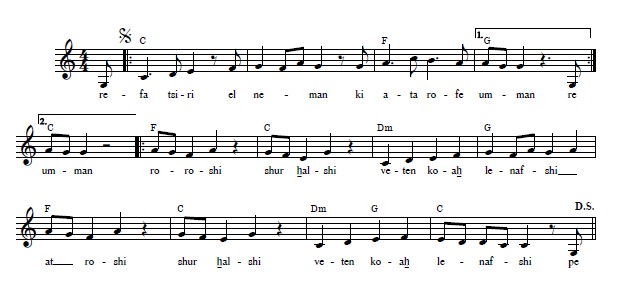
La Huida de Jacob consists, as most Spanish romances do, of lines of sixteen syllables divided into two hemistiches of eight syllables each. All lines end in the assonant rhyme in ó (hurtó; Dio; estoy, etc.). In the Livorno manuscript, each four hemistiches are written consecutively (sometimes with punctuation separating them), and each such set is numbered with a Hebrew letter. This format may reflect the musical performance of the romance, which commonly consists of four short musical phrases corresponding to four hemistiches. The cyclical repetition of the melody every four hemistiches creates “musical strophes” that are apparently inscribed in the Livorno manuscript.
Content
The narrative follows two episodes from Genesis chapters 28 (10–18) and 29 (10–29). Jacob flees from Esau. Stopping for the night, he sleeps with a stone for a pillow and dreams of a ladder reaching from earth to heaven, with angels ascending and descending on it. God stands above it and reiterates to Jacob the covenant made with Abraham and Isaac: the land will be given to him and his descendants, his offspring will be numerous, and through them all families of the earth will be blessed. Jacob awakens, awestruck, realizing that God is present in that place.
Jacob meets Rachel at a well and, learning she is his cousin, rolls the stone away and waters her father Laban’s flock. He weeps, reveals his identity, and is welcomed by Laban. After a month, Jacob asks to marry Rachel and agrees to work seven years for her, which feel short because of his love for her. When the time comes, Laban deceives Jacob by giving him Leah, the older sister, instead of Rachel. Jacob realizes the deception the next morning. Laban explains that the older daughter must be married first but promises Rachel as well in exchange for another seven years of work. Jacob agrees, marries Rachel, and serves Laban for another seven years.
Beyond the narration of these biblical events, the anonymous author(s) of this romance add lyrical motifs characteristic of the genre that are absent from the biblical text. This literary device is evident in the description of Jacob's reaction to Rachel's beauty: “Vido pasar una pastora / tan hermosa como el sol” (He saw a shepherdess coming, beautiful as the sun), or in the detail of his falling in love at first sight: “Que le entraba en l’alma / un costante y firme amor” (A constant and firm love / entered his soul). These lines are extremely common formulae found in romances.
However, the romance in general adheres closely to the biblical narrative; thus, poetic devices common in traditional romances, such as extended dialogues and parallelism, are proportionately limited. Two short dialogues appear in this text. One is in strophe 7: “Quien eres bella señora / le dijo el noble Yaacob / Rahel hija de Laban / descendiente de Nahor” (Who are you, beautiful lady? / said Yaakov / I am Rahel / the daughter of Lavan). An additional dialogue is found in strophes 10–11: “Acabo de vente años / de este modo lo engañó / Para darme la mayor antes de la menor. / Respondió Laban no se usa / en nuestra tierra / Para dar la menor / antes de la mayor” (After twenty years / he deceived him in this way / to give me the older daughter / before the younger // Lavan answered: in our land / it is not customary / to give the younger / before the older). Notably, in the Amsterdam and Gibraltar versions of La Huida de Jacob, this second dialogue does not appear.
As is common in oral romances, in the Livorno text several lines do not appear in the appropriate narrative sequence. Thus, strophe 6 reads: “Abrevando las ovejas / con grandissimo fervor / Vido pasar una pastora / tan hermosa como el sol” (While watering the sheep / with great fervor / he saw a shepherdess approaching / beautiful as the sun). In the biblical story, however, only after Rachel arrives does Jacob remove the stone from the well and water her sheep. In the earlier version from Amsterdam, the correct sequence is preserved.
The concluding lines of this romance are of particular interest. They include a reference to the symbolic meaning of the number of “musical” strophes (12): “Con este son doce versos / doce tribus de él salió / De ahí se fraguó Yisrael / pueblo escogido de Dios” (With this there are twelve strophes / twelve tribes descended from him [Jacob] // From them came [the People of] Israel / the chosen people of God). These lines depart from the narrative of the romance and suggest another Sephardic literary genre, the coplas. The voice of the author/speaker enters the song to conclude it, emphasizing an intra-Jewish theme. This ending is not surprising. Assuming that the origin of La Huida de Jacob lies among the ex-converso Jewish literary circles of Amsterdam and, moreover, that the romance was intended for performance during Purim festivities, an author familiar with coplas may have chosen to end the narrative with a didactic message characteristic of that genre.
Language
What can one learn from the language of the Livorno version of La Huida de Jacob? As noted, this is the only known version of this romance in Hebrew script. This script reveals aspects of the pronunciation of Judeo-Spanish that the versions in Latin characters cannot capture. Scholars of Judeo-Spanish usually differentiate between the spoken language that developed in Sephardic communities of the eastern Mediterranean (known as Ladino or Judezmo) and Haketiya—the Spanish spoken by Jews in the Maghreb, which is closer to peninsular Castilian Spanish.
The distinguished Judeo-Spanish linguist Aldina Quintana has suggested that the pronunciation reflected in the Livorno version of La Huida de Jacob is clearly Haketiya and that, therefore, the origin of the song is in Northern Morocco (personal communication). This pronunciation is reflected in spellings like אנחיליס; אוביחאס; איסקוחידו (escogido, ovejas, ángeles), which reflect Castilian/Northern Moroccan diction of the letter “j” or the syllable “gi,” instead of the “ğ” sound characteristic of Ladino. Other words reflecting Haketiya are “vaso” (cup) instead of “vazo” in Ladino; “buscó” (searched), “bushkó” in Ladino; and others. The word for God is “Dio” (as in Ladino) or “Dios” (as in Castilian Spanish). On the other hand, another eminent Judeo-Spanish linguist, Ora (Rodrigue) Schwarzwald, suggests that this text reflects a mixture of linguistic traditions, Judeo-Spanish and Castilian Spanish. Schwarzwald refers to spellings such as ויזיון, קאזה, קאזו, איז'ס, and others, all reflecting Eastern Mediterranean Ladino voiced fricative pronunciation of the Spanish “s” and “j”. Such mixed pronunciation may reflect the language of a Castilian-speaking converso who returned to Judaism in Italy and was in close contact with his Levantine brethren, who also settled in communities such as Livorno.
Be that as it may, the circulation of La Huida de Jacob only within the Western Sephardic sphere—Amsterdam, Gibraltar, and Livorno—explains its linguistic ambiguities. These centers were connected by a constant flow of conversos leaving the Iberian Peninsula and resettling there. At the same time, Livorno (as well as Venice) was a meeting point for Sephardic Jews from the Ottoman Empire, North Africa, and Western Europe. Hebrew publishing houses in Amsterdam, Livorno, and Venice printed and distributed books produced and consumed by Ottoman and North African Jews. La Huida de Jacob is one of the texts that emerged from this dynamic network of displaced Iberian Jews across Western Europe and the Mediterranean. Its roots lie in the Iberian romance genre and the biblical stories shared by Jews and Christians, but its import, exemplified by its closing strophe, refers back to the specific Jewish experience.
Remembering and Forgetting in the Sephardic Romancero
The presence of the romance about Jacob and Rachel in sources from the seventeenth and eighteenth centuries raises another question: Why did certain biblical romances survive in the oral tradition of Sephardic Jews, while others, such as this one, disappeared? Salama (1982) suggests several explanations. The first is the assignment of certain romances to social and ritual functions. Some romances were integrated into the repertoire sung at life-cycle celebrations or religious ceremonies and thus survived. In Morocco, a romance about the sacrifice of Isaac became a song for the circumcision ceremony; romances about the life of Moses or the Exodus from Egypt were adopted for the Passover season; and the romance about David's lament over Absalom suited the atmosphere of the Ninth of Av. Another explanation for the survival of biblical romances centers on the family relations described in the narratives and the potential didactic messages these stories may have conveyed to members of the Jewish community. For example, the romance about the rape of Dinah became a wedding song containing a warning against improper behavior by young women. Such biblical stories contain strong dramatic and emotional elements that inspire powerful poetic creativity.
The story of Jacob and Rachel, on the other hand, is not specifically associated with a ceremony in the Jewish calendar or with life-cycle events, even though, as noted, the first appearance of La Huida de Jacob is in a printed booklet of comedies for Purim. In addition, although the biblical narrative about Jacob—especially his love story with Rachel—has dramatic potential that could have attracted romance audiences, the text that survived in written form fails to capitalize fully on this promise. These reasons, among others, may explain the disappearance of this romance from the repertoire of Sephardic Jews that was transmitted orally until the twentieth century.
References quoted
Besso, Henry V. 1939. “Dramatic Literature of the Spanish and Portuguese Jews of Amsterdam in the XVIIth and XVIIIth centuries (suite)”, Bulletin Hispanique 41, no. 4, pp. 316-344.
Díaz-Mas, Paloma. 2006-2007. “Une ballade inconnue sur le patriarche Jacob dans un manuscrit du XVIIIe siècle (Gibraltar)”, YOD 11-12, pp. 21-34.
Díaz-Mas, Paloma y María Sánchez Pérez. 2013. Los sefardíes y la poesía tradicional hispánica del siglo XVIII. El Cancionero de Abraham Israel (Gibraltar, 1761-1770), Madrid.
Glaser, Edward. 1956. “Un patriarca bíblico en el romancero”, Sefarad 16, pp. 113-123.
Refael, Shmuel. 1997. “The Bible in the Judeo-Spanish Romancero”, Hispano-Jewish Civilization after 1492. Eds.: Michel Abitbol, Yom-Tov Assis and Galit Hasan-Rokem, Jerusalem, pp. 215-223. [Hebrew]
Salama, Messod. 1982. The Biblical Ballads of the Sephardim: A Literary and Linguistic Study. Ph. D. Dissertation, University of Toronto.
Salama, Messod. 1997. “Rabbinical Exegesis in the Judeo-Spanish Romancero”, Hispano-Jewish Civilization after 1492. Eds.: Michel Abitbol, Yom-Tov Assis and Galit Hasan-Rokem, Jerusalem, pp. [55]-[80].
Van Praag, Jonas Andries. 1939. “Dos Comedias Sefaraditas”, Noephilologus 25, pp. 12-24.