Year
1862




Name of Document: Introduction by Eugène Manuel to Israël Lovy, Chants Religieux; Composés Pour Les Prières Hébraìques.
Source: Eugène Manuel [Lovy], “Israël Lovy,” Chants Religieux; Composés Pour Les Prières Hébraìques. Paris: Temple Israelite, 1862.
A footnote added to the title of this document reads as follows: “This article partially derives from a more developed biography that Mr. Eugène Manuel [1823–1901], Professor at the University, dedicated to the memory of his grandfather, [published] in the June and July 1850 issues of Archives Israélites, a journal founded [in 1840] by the late Mr. S.[amuel] Cahen [1796–1862], the erudite and lamented translator of the [Hebrew] Bible [into modern French].”
Indeed, Manuel’s biography of his maternal grandfather, cantor and composer Israël Lovy (1773–1832), signed in May 1848, appeared in Archives Israélites, vol. 11 (1850), pp. 298–306, 344–352, and a second time in Univers Israélite, vol. 17 (1861–62), pp. 415–419, before being included at the opening of Chants Religieux. Eugène Manuel (1823–1901), a prestigious figure of the nineteenth-century French Jewish elite, was only nine years old when his grandfather passed away. It therefore seems reasonable to argue that the information included in this essay was provided largely by Israël Lovy’s son and Manuel’s uncle, Jules Lovy, himself a distinguished Parisian music journalist, composer (a wedding song by him is included in Chants Religieux), and curator of his father’s legacy.
This biography was later paraphrased in several publications, usually in abridged form. The noted Belgian music historian and composer François-Joseph Fétis (1784–1871) was apparently the first scholar to include a biographical entry on Lovy in his groundbreaking biographical encyclopedia, an honor that reveals the interest in the cantor among non-Jewish Francophone musical circles. This biography is extremely close to Manuel’s essay (François-Joseph Fétis, “Lovy, Israel,” Biographie Universelle des Musiciens et Bibliographie Génèrale de la Musique, 2e éd., entièrement refondue et augmentée de plus de moitié, Paris: Firmin-Didot, 1866–68, vol. 5 [1867], pp. 357–58).
After Fétis, the next notable biography of Lovy stemming directly from Eugène Manuel’s text was published in German by Aron Friedmann (Lebensbilder Berühmter Kantoren II: Zum 100. Geburtstage des königlichen Musikdirektors Professor weiland Louis Lewandowski. Berlin: C. Boas Nachf., 1921, pp. 32–34). In a footnote to the title of this entry, Friedmann refers to an essay by J. [osef?] Singer, “Die Entwicklung des jüdischen Cantorats von der Mitte des 18. bis zum Beginn des 20. Jahrhunderts,” as his source. We have thus far been unable to locate an essay with this title. Friedmann’s publication succinctly replicates Manuel’s text in many of its details, adding, however, quotations from two newspaper reports concerning Lovy’s concerts with his meshorerim in Nuremberg in 1799 before a non-Jewish audience, a feat that Friedmann emphasizes. We have added, as an appendix to Manuel’s essay, a translation of Friedmann’s entry on Lovy for the sake of comparison and to evaluate how texts are transmitted across generations.
Abraham Z. Idelsohn’s replication of Lovy’s biography by Manuel (‘‘Song and Singers of the Synagogue in the 18th Century with Special Reference to the Birnbaum Collection,’’ Hebrew Union College Jubilee Volume 1875–1925, ed. D. Philipson et al., Cincinnati, Ohio, 1925, pp. 419-422; Jewish Music in Its Historical Development, New York: Holt, 1929, pp. 226–229; Hebräisch-Orientalischer Melodienschatz, vol. 6 [1932], p. XXVI-XXVII) is its first extended English version (a very short entry on Lovy had appeared in The Jewish Encyclopedia, ed. Isidore Singer and Cyrus Adler, 1901–6, vol. 8, p. 191). Idelsohn, however, clearly draws from Friedmann rather than from the French original, as he quotes one of the newspaper reports of 1799 that appears in the latter’s text. Later publications about Lovy quote from Idelsohn’s book—a secondary source, as we have seen, that has become authoritative among English-language readers—while disregarding Manuel’s original text (see, for example, Mark L. Kligman, “In Search of ‘European Means of Musical Expression’: Modernizing Synagogue Music, from Israel Lovy to Samuel Naumbourg,” The Musical Quarterly 101/4 [2018]: 363–406).
Lovy’s biography by Manuel has also been duly analyzed by Gérard Ganvert in his groundbreaking dissertation on synagogue music in Paris during the first Consistory period (Gérard Ganvert, La musique synagogale à Paris à l’époque du premier temple consistorial (1822–1874), Thèse de Doctorat de Troisième Cycle, Université de Paris-Sorbonne – UER de Musicologie, 1984, available online in an amended 2021 version). Ganvert provides many clarifications regarding Lovy’s career, as well as details about the personalities involved in the production of Chants Religieux (see below).
Eugène Manuel’s text is followed in Chants Religieux by an anonymous “Avant-Propos” (Preface). From this second text, we learn about the collaborative effort behind the production of the volume. It becomes clear from reading this foreword that Lovy’s raw materials, which were in the possession of his heirs, required substantial editing, including the addition of instrumental accompaniments and harmonization. Several figures are mentioned as having intervened in the process of editing and publishing Lovy’s compositions, among them his predecessor (and short-term successor) in the Paris pulpit, Isaac David, and his son Samuel David (the future musical director of the Consistoire), as well as the then-young pianist, synagogue organist, and composer Ernest Cahen.
Naumbourg, in particular, emerges as a crucial figure in arranging the music for publication, including supervising the setting of the text underlay. Since Naumbourg had already included pieces by Lovy in his own publications printed prior to Chants Religieux, we may assume that he had access to Lovy’s scores soon after his arrival in Paris. Put differently, the degree to which Chants Religieux reflects the practice of Israël Lovy three decades prior to its publication needs, at the very least, to be reconsidered in light of Naumbourg’s intervention.
Those who frequented, thirty years ago, the Synagogue of Paris have surely not forgotten Mr. Lovy, the officiating minister. He was a learned man and an admirable cantor, who honored—one might even say demonstrated—his modest functions through the remarkable talent he displayed there. Endowed with one of those rare musical temperaments that Heaven occasionally produces for the delight of the multitude, he could have become a great artist elsewhere, even an eminent composer; his name, grown glorious and popular, might perhaps have ranked alongside those of Meyerbeer, Mendelssohn, and Halévy. But he preferred to live for the religion, for his family, in modesty and obscurity, in the shadow of the synagogue and amid the sacred books from which he drew his inspiration.
In publishing this collection of Mr. Lovy’s compositions, we think it useful to add some biographical documents and to record the principal traits of this venerable figure, before his memory fades entirely from the minds of the generations that knew and loved him best.
Israël Lovy was born near Danzig [Gdańsk, northern Poland] in September 1773.[1] He was the eldest of six children, and his father, like his grandfather before him, had held in Poland or Pomerania the functions of ḥazzan (cantor).[2] As a very young boy, he followed his parents to Glogau [Glogów] in [Lower] Silesia [Western Poland], where his father had just been appointed to the synagogue of that city, one of the most important Jewish communities in the Prussian states. Israël Lovy was raised among the scholars and rabbis of Glogau, who introduced him to Talmudic studies at an early stage. He made great progress and was destined for the rabbinate; but the musical vocation that developed in him upended these plans. Soon he desired to sing in the synagogue alongside his father, and when his fresh voice was heard next to his father’s, the effect was one of general surprise and admiration. Already then, he took pleasure in revising an older and more colorful paraphrase of the traditional melodies of the Bible and Hebrew prayers, and to his perfect understanding of the sacred texts he merged a sweet and sonorous voice that enhanced their eloquence and poetry.
His father therefore abandoned his former plan; and after two more years of study, at not yet twenty years old, the young minister fulfilled and renewed the duties of his calling as ḥazzan. He traveled through Silesia, Saxony, Bohemia, Moravia, part of Austria and Bavaria, accompanied by two assistant-singers who had known him from birth. It was during these travels that he discovered the masterpieces of Haydn, Cimarosa, and Mozart; their genius awakened his own, and he devoted himself with ardor to musical composition.
After six or seven years of this wandering life, Israël Lovy arrived in 1799 in Fürth, Bavaria. He was engaged in that city and married there. This stay in Fürth (1799–1806) was one of the happiest and most busy periods of his life. With equal ardor he studied the piano, violin, and cello; he learned French from an émigré lodged in his home, and added Italian—this eminently musical language. These extraordinary efforts still left him time to shape the arabesques of melodies of original character. His reputation soon spread, not only in Fürth and among the Jews, but even in neighboring cities and Christian circles. Spiritual concerts were organized in Nuremberg for his sake; he sometimes sang there the finest airs of Haydn and Mozart, and the success he met with was such that Elector Maximilian Joseph (later King of Bavaria in 1806) wished to hear him and summoned him to his residence in Aschaffenburg, where Lovy sang [Haydn’s] The Creation. The King of Württemberg also heard him; thus the fame of the Jewish singer brilliantly surpassed the boundaries of the synagogue.
In 1808 Israël Lovy left Fürth for Mainz, where he stayed two years. Strasbourg was the next [city] to engage him; he settled there for eight years. Sought by musical amateurs and artists of the city, he often yielded to their requests to perform at concerts, becoming an outstanding interpreter of the great German music.
In 1816 he made a several-month journey to visit his parents in Glogau. He also sang during this trip in several German synagogues, especially in Berlin and Frankfurt.
Returning to Strasbourg, he stayed there a while longer. Very advantageous offers were made to him by the Synagogue of London. Yielding to repeated insistence, he first came to Paris (February 1818), after having sung successively in Metz, Nancy, Thionville, and Verdun. This trip, which, in his mind, was to be only a tour of a few months, resulted in a permanent settlement. The Jews of Paris welcomed him enthusiastically. A large number of people from all religious groups –composers, artists, playwrights, famous singers such as [Ferdinando] Paër, [Gioachino] Rossini, [François-Joseph] Talma, [Jean-Blaise] Martin, Mme Catalani– came to hear him in the two synagogues of the Rue Sainte-Avoye and the Rue du Chaume, where he officiated alternately, and which soon became too small for the crowds.
Mr. Lovy had not come to Paris with the official title of ḥazzan, but as a traveling artist visiting a great city; he was celebrated as such. The salons of the Comte d’Anglès, of the Comtesse Merlin, and others opened to him; he was welcomed with eagerness as the Jewish bard. Mme [Angelica] Catalani, director of the Théâtre-Italien, invited him to her weekly soirées and persuaded him to sing there with her.
It was then that the most pressing solicitations attempted to make him abandon his modest career for the stage. With his prodigious facility and his knowledge of the great German and Italian operas, a few months would have sufficed to prepare him for such a transformation; he could have shone beside the greatest artists and acquired glory and fortune. It was a grave and decisive moment in Israël Lovy’s life. He resisted these temptations. Awaking from a momentary dazzlement, he withdrew from worldly salons, renounced even his planned trip to London, and signed a definitive contract with the Jewish Consistory of Paris [Consistoire israélite de Paris].
Other honors awaited him in his duties as officiating minister. He was, if not the cause, at least the opportunity for an important restoration of the Jewish liturgy in Paris. A temple was needed worthy of the religion and of Lovy’s singing; the Consistory resolved to build a synagogue. After praiseworthy sacrifices and necessary loans, the new temple was completed, not with all the proportions one might have wished for the future, but on a plan suitable and proportionate to the needs of the time. Mr. Lovy was entrusted largely with the liturgical reorganization of the services. He focused his reforms especially on the role and use of religious music, establishing a boys’ choir of fifteen to twenty children and adding two assistant-singers. Besides the melodies he had brought from Germany, he composed new chants for all ceremonies. Meanwhile, in agreement with notable members of the Consistory, he worked to reform certain minor habits of the faithful concerning the strict character of the synagogue and its major festivals.
The new temple was inaugurated on 5 March 1822. It marked a new era for Judaism in Paris. These reforms, which at first provoked some complaints among the most orthodox. though they did not touch the dogma, eventually triumphed over all superstitions thanks to the excellence of their results. The recent introduction of the organ, adding a new element to earlier innovations, has not sensibly changed the imposing and original character of the rite. The work of Mr. Lovy remains intact.
Unfortunately, he was not long able to enjoy the growing success of his reforms. The efforts he had to make to create and improve this newly established blend of choral and instrumental [music] exhausted his strength and health.
Struck by mental estrangement following family bereavements, he felt even more the need to fortify his soul and console himself through the pure joys of art and religion. Israël Lovy belonged to that class of men whom dignity often kills; they stand too often on the breach. Already ill, he continued to celebrate the Sabbath services. He conducted the funeral of a young girl with almost the entire community present and emerged weakened. He also gave, nearly at the point of death, a long funeral ode on 7 January 1830, at the age of fifty-nine. He sang for the last time in the synagogue in September 1831, the very day Paris learned of the fall of Warsaw and the new martyrdom of Poland, which he had loved as a second homeland. The stream of chant from the country he loved became mute.
Apart from the Jewish liturgy, which he had perfectly digested, and his complete command of the language of Moses, which enabled him to maintain correspondences with German rabbis who valued his insights, Mr. Lovy composed a considerable number of German translations of sacred books, Ben-Sira, Maimonides, and the Talmud.
But the liturgy was his essential merit. What one admired in him was the powerfully musical organization of the chant. Instinct had done almost everything; without a tutor, he learned to play three instruments and even became an able violinist. He interpreted with inspiration the masterpieces of Mozart and Haydn, who became his models.
All his compositions bear the double imprint of the sweetest melody and the purest harmony. Some prayers he composed for the service possess a remarkable tenderness; some joyful and lively chants for festive days are full of charm and freshness. Thus, his chant for the opening of the Ark, and the Kol Nidrei sung on the eve of Yom Kippur, and many others, always made a profound religious impression; several have spread through the synagogues of Europe, where they are performed in memory, though often imperfectly. But only he knew how to sing them. Endowed with a mellow and frank bass voice whose lower notes descended to low F, he combined with it the registers of baritone and chest-tenor, connecting them to the head-voice through the softest transitions. It was a fortunate union of the qualities of the singers [Jean-Blaise] Martin and [Manuel del Pópulo Vicente Rodríguez] García, with a bass-baritone range that even these eminent artists did not possess. To an exquisite purity of timbre, he added an agility and suppleness without equal; the marvels of his vocalization, the sweetness of his appoggiaturas and trills, his softened organ-points, are still engraved in the memory of Parisian dilettantes. In Mr. Lovy lived the tradition of modern taste; in his singing one recognized at once the elegant phrasing of the great Italian school and the broad accentuation later revived by [Gilbert] Duprez.
It has been said: cantors utterly die. They spend their life and their soul to move the crowd; and because they leave nothing of themselves behind, they are forgotten. Mr. Lovy, moreover, has nothing to regret, since fame was not his aim. He devoted his talent to God without afterthought, regarding himself as the interpreter of prayer, the servant of the community. He charmed without pride. More than anyone else, he contributed for some years to the splendor of the Jewish services, and never did he take advantage of his prominent role.
May the publication of these chants, by assigning him a place in the history of religious music, rescue from oblivion the name of Israël Lovy, and grant him after death a share of that reward he never desired, but which a man as modest and as naturally endowed for music deserved more than any other!
Since the death of Israel Lovy, tradition and the memory of the officiating ministers, his successors, had preserved only few pieces of religious music composed by this celebrated Hazan on behalf of the Israelite Temple of Paris. It had always been regretted that a collection as complete as possible of M. Lovy's chants had not been assembled to serve regularly for the performance of the services. The Temple administration had limited itself to having some of these chants transcribed, unfortunately disfigured by deficient memories.
The Paris consistory had repeatedly addressed the widow and children of Israel Lovy to express the desire that the manuscripts he had left be made available to the Temple; but family scruples and respect for a mourning that had withstood the years long prevented M. Jules Lovy from responding to this wish, whose very expression was a tribute to his father's memory.
Nothing now impedes this publication.
Beyond the manuscripts of which we currently possess the original part of this collection, M. Jules Lovy has neglected no means to ensure the perfect accuracy of all the religious chants he publishes. The memories of M. [Isaac] David Sr. [d. 1864], former officiating minister, and the cooperation of M. [Samuel] David Jr., [1836-1895] first served to carefully collect those chants that had never ceased to feature in the sacred service. M. Ernest Cohn [Ernest Cahen (1828-1893)], lent his useful and learned assistance to the instrumentation of pieces that needed to be adapted and completed for the current needs of religious service. Finally, M. [Samuel] Naumbourg [1817-1880], minister-officiant, offered the publisher his devotion and practical knowledge, not only for the general revision of melodies and their instrumental accompaniment, but also for the exact adaptation of each piece to the text of the corresponding prayers. Thanks are due to all of them for their participation in this long-awaited work, this sacred heritage of a family happy to finally endow it to our Jewish communities.
This collection includes:
1° Chants composed for the Sabbath and festival services;
2° Hymns and psalms particular to specific religious ceremonies;
3° Lieder and airs of Polish character, intended for family gatherings to which the officiating minister may be called. These airs are largely the oldest that M. Lovy had composed; some dating back to his tenure in Germany.
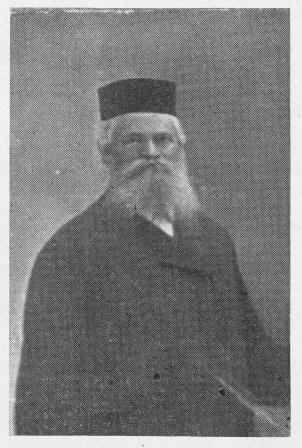
The portrait of Israel Lovy that accompanies this collection, Chants religieux, has been reproduced by a talented artist, M. Auguste Hirsch, after the beautiful original portrait by M. Degeorges [Thomas Degeorge (1786–1854)], owned by the family.
(*) M. David Jr. and M. Ernest Cohn are both laureates of the Institute for the musical composition prize.
English translation of Aron Friedmann’s article, “Israel Lowy (Jisroel Glogau), Paris (1773–1832)”[3]
In the year 1773, the exceptionally gifted and renowned cantor Israel Lowy (Jisroel Glogau) was born in Danzig. Already at the age of thirteen he was qualified to serve as cantor in the largest Jewish communities of Moravia, Bohemia, Saxony, and Bavaria, and everywhere won the greatest acclaim. In keeping with the custom of distinguished cantors of the period, he traveled incessantly from one community to another until, at the age of twenty-six, he established himself on firm footing as resident cantor in the important community of Fürth in Bavaria. Inspired by a strong desire for comprehensive musical and general education, he devoted himself to study and is said, after only four years, to have attained great proficiency in piano, violin, and violoncello playing, as well as knowledge of several foreign languages.
As evidence of Lowy’s quite extraordinary vocal achievements, one may cite the report according to which, in nearby Nuremberg—then inhabited by no Jews—he organized, together with his meshorerim (choir singers), six sacred concerts. These were received with such enthusiasm that the then Elector Maximilian Joseph, later King of Bavaria, had Lowy invited to assume the tenor part in Haydn’s Creation, performed at the court concert in Aschaffenburg.
Two documents preserved in the Germanisches Nationalmuseum in Nuremberg, relating to the aforementioned Nuremberg concerts, are cited here verbatim:
(Friedens- und Kriegs-Courier, no. 62, 14 March 1799.) Musical notice: “On Sunday, the 17th of March, Mr. Lowy of Fürth, together with two additional singers, will have the honor of presenting here at the Bitterholz (now the Hotel ‘Zum Bayrischen Hof’) a grand musical academy. He respectfully recommends himself to an esteemed public and hopes for a numerous attendance. The performance begins at 6 o’clock; admission 30 kreuzer.”
(Friedens- und Kriegs-Courier, no. 67, 20 March 1799.) “The three musical artists, especially Mr. Lowy, who gave the musical academy on the 17th of this month at the Bitterholz, express their sincere thanks for the great applause bestowed upon them and for the favorable reception, and commend themselves most respectfully.”
These two announcements sufficiently demonstrate how significant the vocal performances of this Jewish cantor and his singers must have been, given that they dared—one must bear in mind, in the year 1799—to give public concerts before an exclusively Christian audience. This fact, however, ceases to be surprising when one learns from the later course of Lowy’s life that, following his subsequent appointment to the Parisian cantorial post, celebrated composers, singers, and female singers—such as Paer, Rossini, Calma, Martin, Mlle. Mars, and Madame Catalani—attended the two synagogues in the streets Saint Avoie and Chaumé, in which Lowy officiated alternately, in order to hear him. In the salons of Count Anglès and Countess Merlin, Lowy sang, among other works, even the most difficult Italian duets with Madame Catalani, to great acclaim.
The attendance at Lowy’s synagogue performances was so extraordinary that the Parisian community found itself compelled to proceed with the construction of a large house of worship, resulting in the great synagogue with organ, inaugurated on 5 March 1822. For this synagogue, Lowy composed an extensive and highly interesting body of synagogue vocal music, which, however, was published in print only in 1862, out of reverence for the composer, by the Paris Israelite Consistory.
This artistically significant activity of a Jewish cantor at the end of the eighteenth and the beginning of the nineteenth century provides proof that the Jewish cantors of that earlier period were not, as is commonly assumed, merely gifted natural talents, but were in fact well acquainted with the laws of musical and vocal art.
Lowy died on Saturday, 7 January 1832, in the fifty-ninth year of his life, having officiated at the divine service earlier that same day.
[1] Later sources specify that he was born in Schottland, the historical settlements of Stare Szkoty (Old Scotland) and Nowe Szkoty (New Scotland), named after Scottish merchants and immigrants who settled in the Danzig area in the seventeenth century.
[2] The name of his father, Isaac, is mentioned only by Ganvert (Gérard Ganvert, La musique synagogale à Paris à l’époque du premier temple consistorial (1822-1874), Thèse de Doctorat de Troisième Cycle, Université de Paris-Sorbonne – UER de Musicologie, 1984, p. 67, note 432), quoting the entry on Israel Lovy in François-Joseph Fétis, Biographie Universelle des Musiciens et Bibliographie Génèrale de la Musique. 2e éd., entièrement refondue et augmentée de plus de moitié, Paris: Firmin-Didot, 1866-1868, volume 5 (1867), pp. 357-8. However, Fétis does not mention the father’s name. Idelsohn on the other hand writes: “His parents came from Poland. They settled in Glogow where he [Israel] became meshorer to Yitzhok Glogow.” (Abraham Z. Idelsohn, Jewish Music in its Historical Development, New York: Holt, 1929, p. 226) Idelsohn, however, does not provide any documentation to substantiate this assertion. He probably inferred this connection based on two pieces in the manuscript of the Berlin cantor Aron Beer (Cincinnati, HUC, Birnbaum Collection, Mus. 53, nos. 128-129) attributed there to Isaac sha”tz (cantor) of Glogau, who may (or may not) have been Israel’s father.
[3] See, Die Entwicklung des jüdischen Cantorats von der Mitte des 18. bis zum Beginn des 20. Jahrhunderts von J. Singer. [The Development of the Jewish Cantorate from the Mid-Eighteenth to the Beginning of the Twentieth Century]