

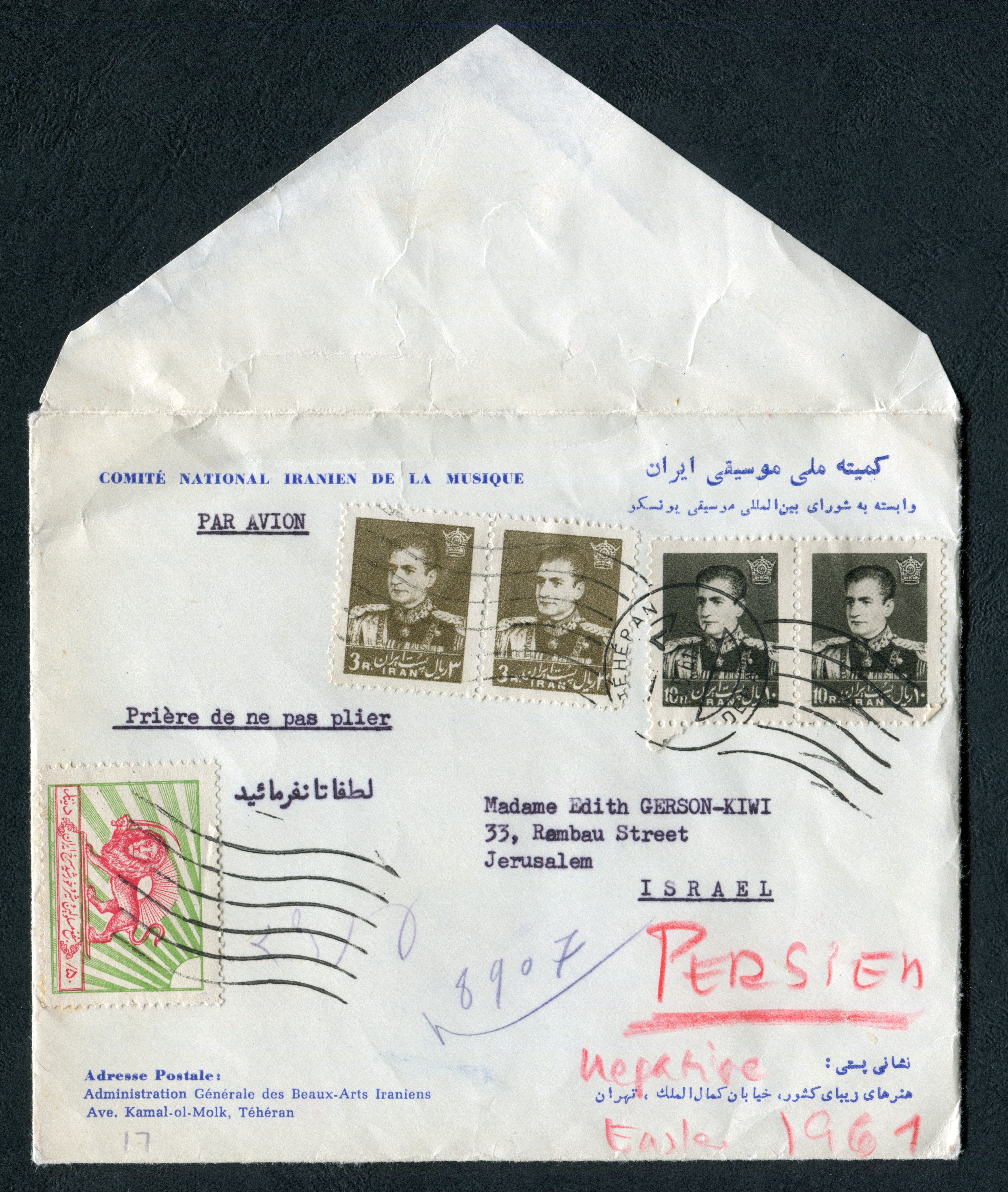
Recordings of Liturgical Music by Cantor Yehuda Dil from Meshed, Tehran, April 18, 1961
Edith Gerson Kiwi’s Recordings of Musical Traditions from Iran


envelop_Tehran_track
Bereshit (Genesis 1)
envelop_Tehran_track
Adonai sham’ati shim’akha yareti Adonai | Atanu lehalot panekha
- “Bereshit” (Genesis 1) chanted according to the traditional cantillation pattern following the Masoretic accents (ta’amei miqrah).
- Chapters 1 and 9 from the Book of Esther, as recited in Purim with the traditional cantillation pattern.
- Exodus, chapter 30.
- Samuel 2, chapter 6
- Psalm 130
- Song of Songs, chapter 1. Recited traditionally on every Sabbath eve.
- “Ahot qetannah,” a Sephardic piyyut sung at the start of the Rosh Hashanah evening services. Composed by 13th-century Andalusian Hebrew poet Abraham Hazzan Gerondi. The poem revolves around the metaphor of a "little sister" (People of Israel) asking God to end the previous year's curses and begin a new year with blessings.
- Two poems for the High Holy Days. The first one is “Adonai sham’ati shim’akha yareti Adonai,” a piyyut of the reshut (“permission”) genre sung prior to the repetition of the ‘amidah (Eighteen benedictions) on the High Holy Days musaf service. The opening is a biblical verse (Habaqquq 3:2) that becomes a refrain. The last verse of each stanza is also a Biblical verse ending on “Adonai” as the refrain. The second one, “Atanu lehalot panekha” is an ancient seliha from the post-Talmudic period performed during the selihot session as well as in the High Holy Day services. Its melodic pattern is shared by most Oriental and Sephardic communities.