Year
2019


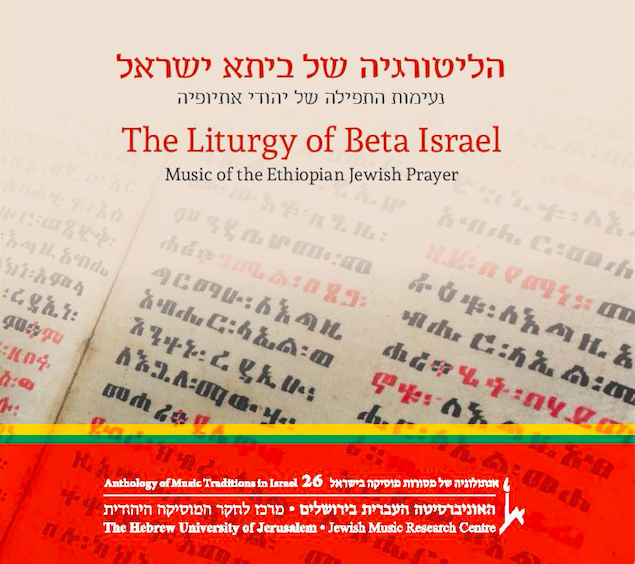

Fāsika (Passover). Soloist: Qes Melkitsedek
This piece consists of two songs that can also be heard separately. The first one, Herzǝgā, appears regularly during the evening service of Passover while the second one, yitbārek, is heard in the morning service on the same holiday but also on Rosh Hashana (Ber’hān Sarāqa) and at the beginning of ‘Āstaseryo. However, the two songs are performed back to back only on the New Moon of the month of Nissan and on (Ber’hān Sarāqa).
Herzǝgā is mainly in ‘Agawegna, but continues in Ge’ez, praising God for having allowed the worshipers to come to this event. It is used frequently throughout the Beta Israel liturgy as one of the equivalents to the Hebrew blessing Sheheheyanu said by Jews to celebrate special occasions or express gratitude for new and unusual experiences. However, unlike Sheheheyanu, a formula that remains identical for all occasions, the text of Herzǝgā is modified to fit each liturgical occasion. Herzǝgā is antiphonal. A passage from it chanted by the soloist serves as a transition to Yitbārek, a responsorial prayer. In Ethiopia, the singing of Herzǝgā was accompanied by a frame-drum. The instrument did not fulfill any rhythmic function; it was merely used to punctuate some words and emphasize certain parts of the text.