

(399 results found)

Patsh Tants (LKT)
… widespread in the region of Vilna... [and all of] Eastern Europe...” Fridhaber 1972, pp. 32-33 . “Patch Tanz. Dance (lit. ‘clap dance’) of Eastern European origin, In a slow duple meter, it is part of the …
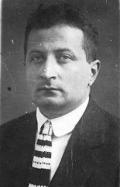
Yekhiel Yeshaye Trunk
… Full biography at The YIVO Encyclopedia Jews in Eastern Europe (Author: Jan Schwarz) A list of his publications at …
Doyne (LKT)
… currency among klezmorim throughout a wide area of Eastern Europe. Primarily intended for listening rather than … and other contemplative, free-meter genres in the East European Jewish tradition, including cantorial recitatives, … recording we have of a Jewish doina , distributed both in Europe and the United States, was made by a certain S. Kosch …
Bulgar (LKT)
… full reference. “ Bulgar or bulgarish is a common East European Jewish music and dance form, usually in 2/4 time. … the American-Jewish repertoire, popular in parts of Eastern Europe in the late 19th and early 20th centuries. Also known … first half of the 19th century. The bulgarish , in Eastern Europe only regionally popular, gradually became the most …
Khosid/Khosidl (LKT)
… style, in a stately 2/4 rhythm. In some regions of Eastern Europe, synonomous with freylekhs.” Alpert 1996b, p. 59 . ( …
Shemele (LKT)
… two Jewish weddings dances that were widespread in Eastern European Jewish communities, and [formed] part of the style … at these last dances, outside of sources found in [Eastern European Jewish] folk song, we have nothing about this … widespread in the region of Vilna...[and all of] Eastern Europe... I have no depiction of the ‘shemele’ dance [from …
«A Special Kind of Antisemitism»: On Russian Nationalism and Jewish Music
… new conditions in terms of both Russian politics and European antisemitism. Most of all, it is due to the fact … echoed the same ideas of Richard Wagner and other European musical antisemites. Jews had no national culture … and hence they could never be creative contributors to European art, only strangers and imitators. [14] Nor was the …
Mekhutenim-tants
… two Jewish weddings dances that were widespread in Eastern European Jewish communities, and [formed] part of the style … at these last dances, outside of sources found in [Eastern European Jewish] folk song, we have nothing about this … widespread in the region of Vilna...[and all of] Eastern Europe...” Fridhaber 1972, pp. 31-36 . “[At the tenoim ,] …
Beroyges-tants
… two Jewish weddings dances that were widespread in Eastern European Jewish communities, and [formed] part of the style … at these last dances, outside of sources found in [Eastern European Jewish] folk song, we have nothing about this … widespread in the region of Vilna... [and all of] Eastern Europe... I have no depiction of the ‘shemele’ dance [from …
Zhok (LKT)
… notation included). “In many communities in Eastern Europe, especially in Hungary, Moravia, and Rumania, Jewish …
Hora (LKT)
… triple-meter hora, the primary form of the genre among East European Jews, is common in northeastern Romania and among … and Hasidic communities. In a much wider area of Eastern Europe, horas were frequently used as processional tunes at … included). “In many communities in Eastern Europe, especially in Hungary, Moravia, and Rumania, Jewish …
Freylekhs (LKT)
… A lively circle or line dance, the most common in East European Jewish wedding dance repertoire, in 4/4 rhythm... … style, in a stately 2/4 rhythm. In some regions of Eastern Europe, synonomous with freylekhs.” Alpert 1996b, pp. 58-59 … included). “Other dances performed at weddings in East European communities were:... Redl, Frailachs, Karahod, …