Year
1978



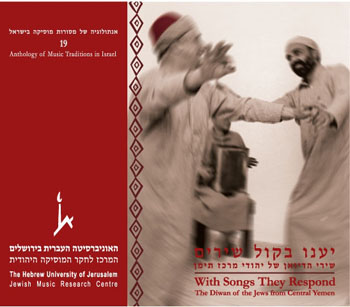
Yosef, Yehuda and Uri Cohen
Yosef Ozeiri and Zecharia Yitzhak
Shira with tawshiḥ by Shalem Shabazi, signed Alshabazi, written alternately in Hebrew and Arabic. It is sung in many celebrations, and particularly in the seven feast days after a wedding. The poemdescribes the struggle of the soul with the evil inclination. The meter is complex, and is a development of shalem (kamal).
In each of these performances a similar melody, but with different approaches, is sung.
8. Yosef, Yehuda and Uri Cohen sing the first two stanzas, the first in Arabic and the second in Hebrew. Their style of singing emphasizes their family relationship and the fact that they are accustomed to singing together, and is of a light and playful character. It includes asymmetrical rhythmical formulae, and hiatuses filled with spontaneous stylized movements of the hands and snapping of fingers. The melody is mostly within the range of a tetrachord, with the addition of a minor third at the end of each verse. The tawshiḥ has a short melody of its own, which ascends and descends within a tetrachord.
9. Yosef Ozeiri and Zecharia Yitzhak begin with the blessing Ana adonai hoshi'a na (We beg Thee, O Lord, redeem us), and sing the melody of song no. 8 in their own version: all of stanzas 1, 2, and 4, and a conclusion consisting of the first three verses of stanza 5 and the last verse of stanza 6 (the end of the poem). They sing a typical responsorium: usually Zecharia begins and Yosef responds, and at the end of each verse they sing together. The performance concludes with the blessing Vekulkhem berukhim.